



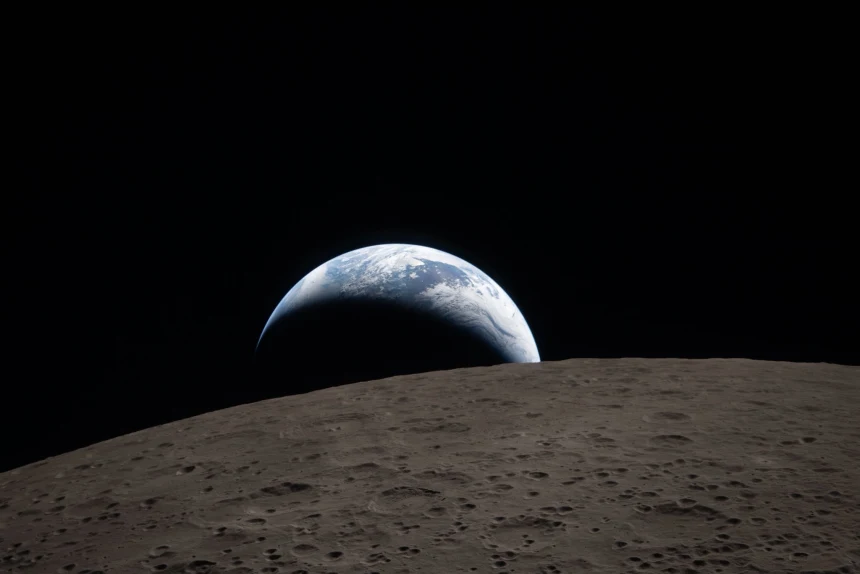


























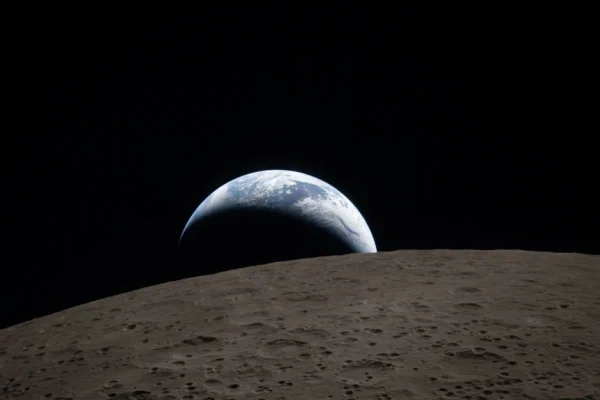
Artemis II, marked the first NASA crewed mission to the Moon in over 50 years. The four crew mission launched on April 1st and lasted 10 days. It consisted of traveling beyond the far side of the Moon, testing and proving the safety of NASA’s Space Launch System (SLS) rocket and Orion spacecraft systems ultimately paving the way for future lunar surface missions.
(NASA)
Sophomore, Christina Hernandez, said NASA’s Artemis II mission will affect future missions as it “would help map out how they can get to the moon quicker because this just proved they can get to the Moon safely and if it’s possible again.” As Artemis II validated life support systems and deep-space navigation, it laid the groundwork for future missions, particularly crew landings on the Moon. According to NASA, future plans include sending astronauts on increasingly difficult missions to advance scientific research, make more economic benefits, and build on the foundation for crewed missions to Mars.
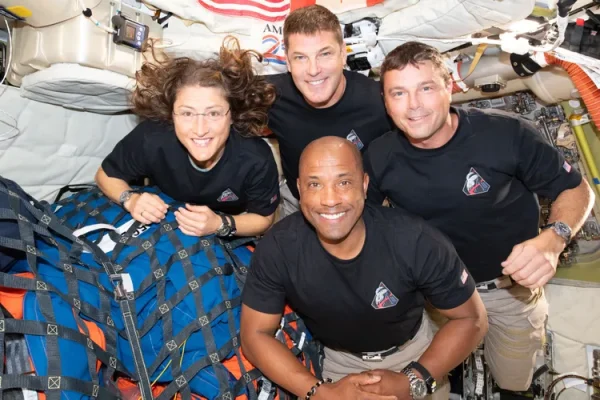
The astronauts chosen for this mission were commander Reid Wiseman, pilot Victor Glover, and two mission specialists Christina Koch and Jeremy Hansen. This crew set several records while on their mission. Christina Koch set the record for the longest continuous time in space achieved for a woman. Victor Glover became the first African American astronaut to live long-term on a space station and orbit the Moon. Overall, the entire crew broke the record for the farthest distance humans have ever traveled from Earth, approximately 252,756 miles.
(NASA)
However, space exploration missions like Artemis II cost billions of dollars to fund. So far Artemis has cost around $93 billion, with each launch costing around $4 billion, as reported by Aerospace Testing International. With the extreme costs of these missions, it is heavily debated whether space exploration missions are truly worth it. Gio Kadar, a sophomore, thinks “I think they are worth the funding. Missions like these don’t just benefit one person or organization, but the whole world. Space exploration is the next big step for humanity, and any funding that is available should be put into NASA and other reliable Aerospace organizations.”
On April 10th the 10-day journey was successfully concluded as the crew splashed down in the Pacific Ocean off the coast of San Diego. The mission was an overwhelming success as they were able to prove the safety and navigation systems of the Orion spacecraft while breaking traveling records, paving the way for future missions. Carly Thomas, a junior here at Liberty, believes these missions are important as, “It’s really important to continue fueling our knowledge on outer space as it can lead to further development of technology as well as allowing us to further understand our limits and furthering the safety of sending astronauts to space without having devastating failures like some of the failed missions in the past.”